
A 30,000 Foot View
The media dramatizing news events is nothing new. And, today, with so much happening in the Ukraine, the mid-east – both in Israel and the Iran conflict over the straits and other issues – and with NATO and balance of trade and defense issues, the news media has a plethora of stories. As usual, the media, in its desire to inform – coupled with ratings-driven entertainment – often neglects to educate. Stories often take a local slant – gas prices for example – and all the various stories are covered in isolation with little thought given to their interrelationship.
First, A Backdrop
To understand what’s driving the various interests (we’ll leave Iran’s theocratic motivation aside for now), it’s important to understand how money works on the global stage, as it affects the behaviors of NATO, Russia, the Ukraine, and Iran.
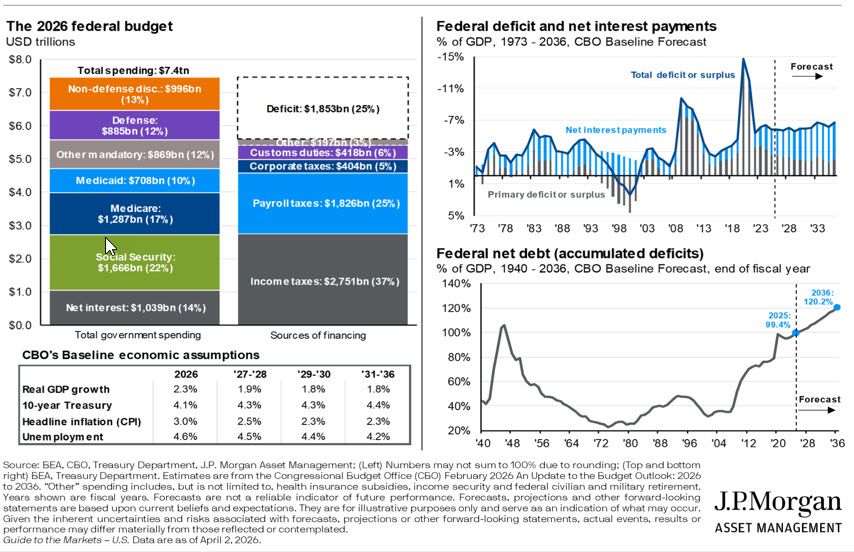
Obvious: the federal government is running annual deficits that accumulate as increased debt.
Next, it’s important to recognize that the total amount of output (goods and services) a country produces constitutes its ultimate budget constraint. It’s large volumes of output – not large quantities of money (inflation) – that makes nations prosperous.
A country’s output is its gross domestic product (GDP): the market value of all final goods and services produced within a country’s borders over a given year. So, GDP is a nation’s output.
When one country wants to exchange its output for that of another, you have a trade deal. When the exchange is perfectly even in value, then both countries’ trade accounts are in balance.
When country A exports more than it imports from country B, country B runs a trade deficit. How does B pay the balance? It borrows money from country A to finance the difference. Country A is lending the money to allow B to purchase A’s excess production.
So, if a country imports products from another country without exporting anything, it could pay for those imports only by borrowing. The seller is financing the sale.
Back to square one: the long-term constraint on consumption and investment (components of GDP) is the amount of output that can be produced. GDP represents the ultimate budget constraint.
A View From the Balcony
The United States has a large debt problem. You can see it in real time here. As you saw on the first slide, the U.S. spends more on debt interest than on national defense, at least as of the end of the first quarter. So, it’s no wonder those who do the spending want to see lower interest rates, since interest rates represent the price of money.
With the war with Iran, the Fed is facing a supply-shock tradeoff and may do little or nothing to lower rates. In addition, increased defense spending could raise deficits even further, which could mean higher longer-term Treasury yields, which could put pressure on stocks and long-term bonds. Why higher long-term Treasury yields? In a competitive marketplace, the government will have to pay higher interest rates to attract an investor to purchase long-term government debt. If the interest is high enough, the investor may sell a risky long-term stock holding to make the purchase.
Where else can the government go for money?
Tariffs are an option. Unfortunately, high penalizing tariffs don’t have a successful history. Without getting into the weeds, it’s worth remembering that trading partners represent more than competitive advantage economically (that’s a different topic); but those countries we trade with also provide defense landing bases, as well as overflight rights – areas which, in the past, have come in handy and, at other times because of tariffs, have come back to bite us.
Europe is purchasing Russia’s oil production, they want to see an end to the Iran conflict,which they hope will lead to lower oil prices. But, Europe has another incentive not to join the Iran fight. Their biggest worry is Russia. Russia depends on hard currency to finance its ambitions and it’s Russia’s oil exports that provides that financing. As long as oil prices are high, Russia runs a trade surplus. If those revenues were to dry up, they would – as President Reagan knew – likely implode.
And, there are those who know their history who see a potential repeat of the 1930s for eastern Europe when a previous “America First’ movement was preaching both isolationism and protectionism while Germany and Italy were promising greatness to their people mired in depression.
So, Russia has an economic interest in Iran continuing the conflict – indeed, continuing may be more important than winning – in order to finance their agenda for Ukraine and beyond. For them, it’s a continuing source of hard currency they need to advance their agenda. Remember the importance of GDP.
I remember it was during my first entry-level course in economics, the professor told the class that a basic understanding was important to being a good citizen.
It’s still true.
Jim
Special thanks to JP Morgan for their assistance in providing the image for this post. IFG and JP Morgan are not affiliated.